Challenges of Combining AI and Human Expertise
Technological innovation and actual human demands must be balanced in order to develop a GovTech solution like Kopilot. Even though AI can automate or replace many processes in some industries, it's important to recognize the human element involved in these operations.
As a company that became a part of the GovTech program by the Innovation Fund of the Republic of Serbia, we were faced with the unique challenge of developing software for a public enterprise. The GovTech program was created to encourage the Serbian public sector to innovate through technology in service delivery and operations. The aim was to accelerate the digital transformation of the public sector and to "open the door" to new, disruptive technologies.
We at LambdaWorks were tasked with building a product to support The Post of Serbia. Our main goal was to create an AI-powered product to streamline the sorting process for packages and letters, ultimately making the sorting process 20% more efficient in the three main post office sorting centers that have a combined influx of around 3.2 million parcels a day. And as such, this product must also meet the needs of a diverse user base, from the more tech-savvy individuals to those less familiar with new technologies.
Understanding the Human Element Behind the Process
To get a good understanding of the environment, processes, and, most importantly, the people, we set out to Belgrade, to visit the largest sorting facility in Serbia. We wanted to gather as much information as possible about the everyday challenges the staff faces while handling the enormous number of parcels going through the facility every day. The goal of automation and digitalization should never be to replace human labor, or add any complexity, but to create something that will instead improve human capabilities and reduce the complexity. So, we aligned our goals, gathered the information we required, and started working on a product that will support their work.
Building Kopilot: An AI-Powered Assistant
We started working on Kopilot, an AI-powered application that will speed up the process of verifying an address and the postal code for that address. It needed to be advanced enough to handle the subtleties of the Serbian language and address formats, yet also intuitive enough for employees to utilize immediately without requiring extensive amounts of training.
Although the Serbian language has clear pronunciation rules, this did not make our task any simpler. We had to consider the practicalities of the sorting environment, since the workers are often moving, handling parcels, and dealing with multiple distractions. Combined with other real-world scenarios including background noises and different dialects, some phonetic combinations presented significant challenges for AI-based speech recognition. It took several iterations of testing and optimization to achieve reliability.
There was a text search option with autocompletion and suggestions for a smooth experience in cases when voice searches weren't adequate. Because both scripts are equally used, the text search had to provide both Latin and Cyrillic display and input. Offering users choices and being inclusive of diverse usage methods should be an ongoing objective in the software development world.
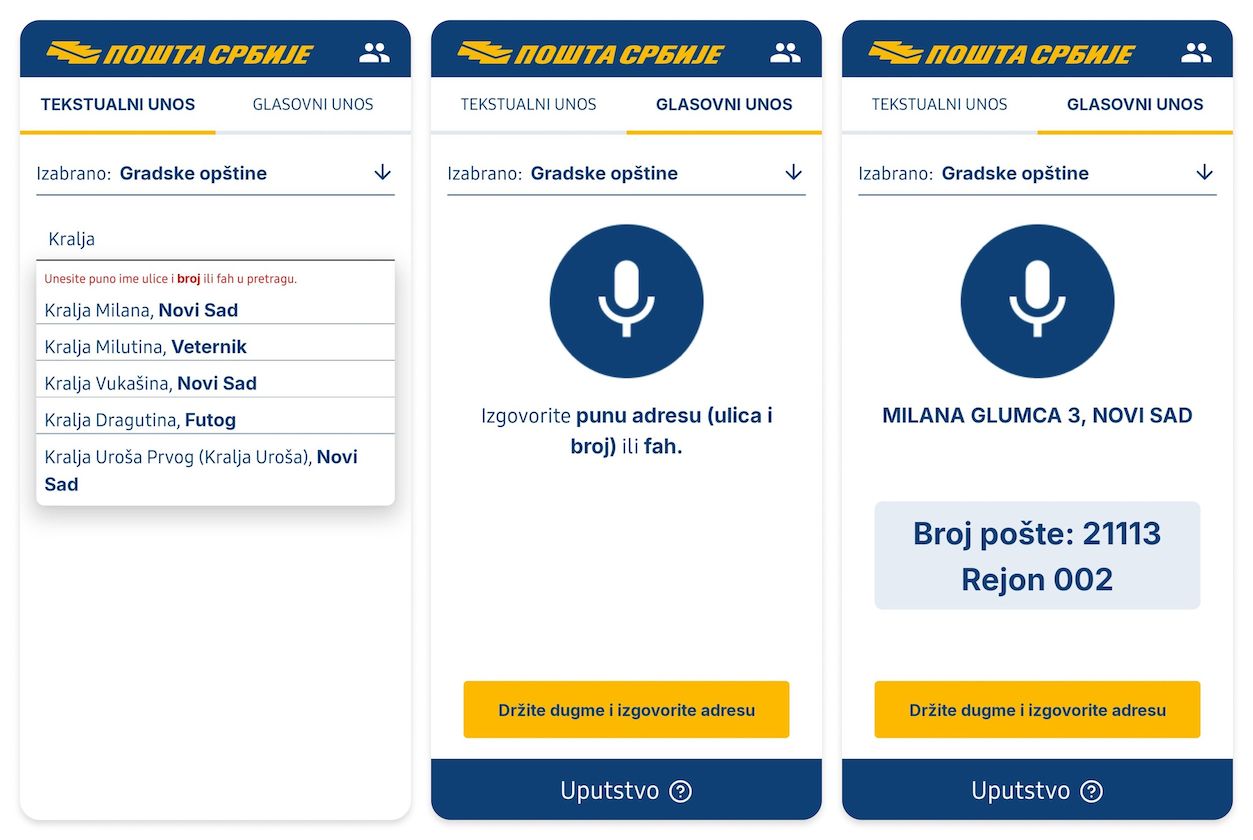
Images 1, 2, and 3. Text and voice search.
Developing a Web-Based Admin Dashboard for Management
Apart from the mobile app, another essential component was a web-based dashboard to manage users and their data. The administrators needed to be able to customize access for each user quickly and reliably. Designing this system also involved careful consideration of data privacy and security, ensuring that sensitive information, like user credentials, was adequately protected. Laying out the data in an easily readable format and providing straightforward actions was also a necessity.
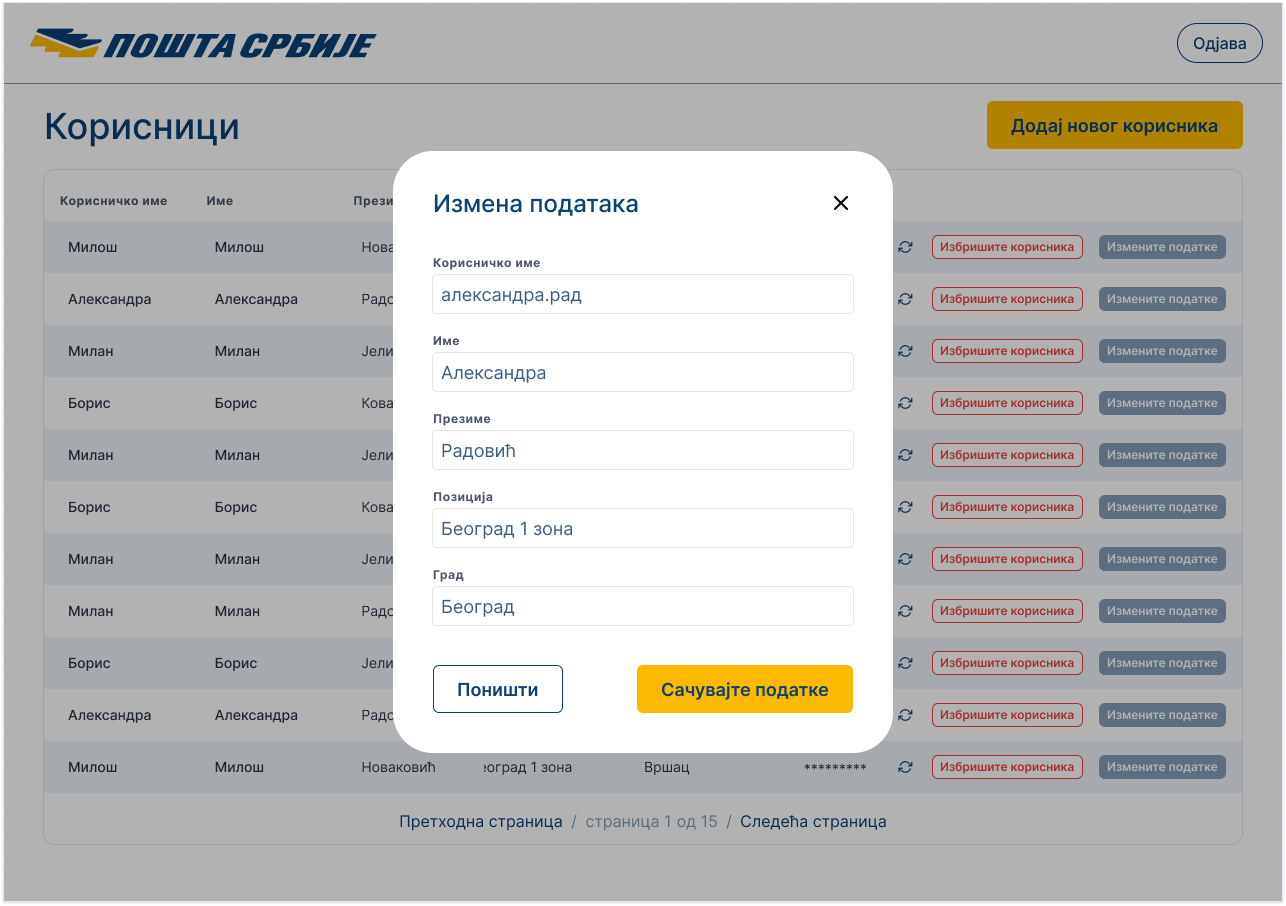
Image 4. User management dashboard.
Reflecting on Building AI for Human Needs
In order to develop a GovTech solution like Kopilot, technological innovation and actual human demands must be balanced. Even though AI can automate or replace a lot of processes in some industries, it's important to recognize the human element involved in these operations. Through our meetings with the personnel and our visits to the sorting facilities, we were able to design the app with the user in mind, making sure that the technology worked for them rather than the other way around.
From improving the speech recognition to integrating the app with the daily operations of sorting facilities, every stage presented a unique combination of human and technological difficulties. The end result is a product that empowers actual people and is more than simply software.
We’re proud that Kopilot will be making a meaningful impact, enabling postal workers in Serbia to perform their duties with greater ease and fewer interruptions and reducing operation costs of the national postal service.